Blog
How to choose the right soccer cleats
Posted by Alexandrine B Morency pht — on Monday, September 17, 2018

Synthetic fields are becoming increasingly common in soccer. The growing use of this surface raises questions about the choice of cleats. Are we at greater risk of injury on a synthetic field when wearing cleats? Should we choose our footwear based on the type of surface we play on? The following information will help clarify these questions.
|
Type of cleats |
Recommended for |
Injury risk |
|---|---|---|
|
Molded (for firm ground)
|
Natural fields; Synthetic fields (if the studs are not too aggressive: round studs are better than blades); Intermediate or beginner players |
— |
|
Screw-in (for soft ground) |
Experienced players who must play on natural grass in rainy conditions |
Increased |
|
For hard ground
|
Natural fields; Synthetic fields (if the studs are not too aggressive: round studs are better than blades); Intermediate or beginner players |
— |
|
For artificial grass
|
Artificial turf fields (specifically designed for them) |
Safest option (reduces the incidence of traumatic and overuse injuries) |
|
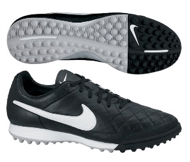
For turf
|
High-quality and dry synthetic fields; Futsal surfaces |
Increased if used on other surfaces (greater risk of slipping) |

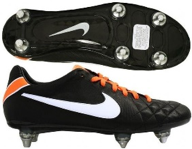
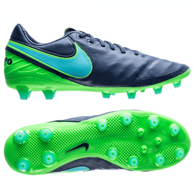
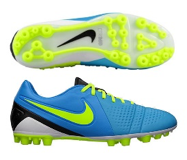
The risk of injury is more closely related to the playing surface than to the cleats themselves. Researchers generally agree that synthetic fields increase the incidence of injuries compared to natural grass (both traumatic injuries and overuse injuries).

In addition, injury risks have been studied in relation to sole type. Soft soles tend to promote forefoot pain, metatarsal stress fractures, and skin calluses. Hard soles may reduce the risk of ACL rupture but increase the incidence of tibial fractures. Semi-rigid soles appear to be the best option, as they reduce the risk of ACL rupture without increasing the risk of other injuries.
In conclusion, it is important to consider the player’s level. If one pair of cleats had to be prioritized, I would choose artificial grass cleats, since they appear to be safer and can be used on both types of surfaces. For elite players, it becomes important to own different types of cleats and adjust them according to the weather and the field conditions.
If an injury does occur, remember that the Évolution team will be happy to help you get back on your feet—or back on your cleats!
Alexandrine B. Morency, Physiotherapist

Articles on the same topic that may interest you